
The curious impact of top-level domain tech trends

Tech folks love a catchy web address. It runs the gambit from you.ai to cool.af. It can be a nod to technology or internet nomenclature, or simply a playful way to order letters.
One trope is using a top-level domain (TLD) that has an association with a computing term such as io referring to input/output.
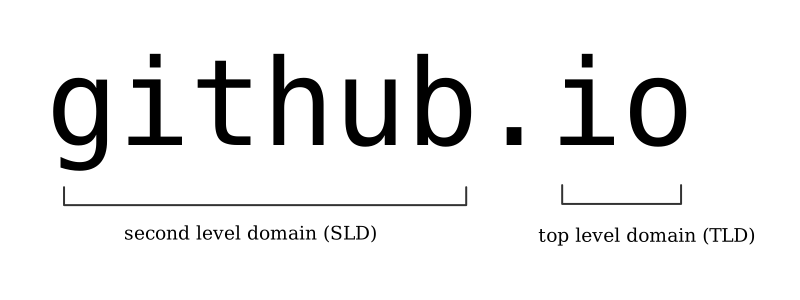
Usually the biggest concern when looking for a fitting domain name is to find one that is available and affordable. What is often forgotten when playing the domain name game is that a TLD represents something. In the case of .io, it represents a place called the British Indian Ocean Territory. This is what is known as a country-code TLD (ccTLD). In fact, any two-letter TLD you see belongs to a country. While you can largely disregard the semantics of a TLD – rarely does a TLD have restrictions – in the case of ccTLDs there can be some unexpected consequences.
Where does the money I pay for my domain go?
In theory, a ccTLD belongs to a country. When you buy a domain name that has a ccTLD, the money you pay goes to the government of that country. The domain registrar, the middle-man who you buy the domain from, takes a cut of course. Examples of domain registars are companies such as Namecheap and GoDaddy.
You may not think it, but ccTLDs are substantial assets. For example, Tuvalu which is a small pacific island state of approximately 12,000 people, has been able to make significant money from its ownership of .tv.
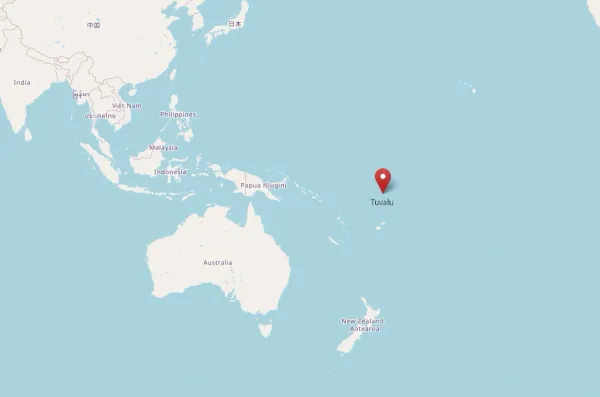
tv TLD.Demand for .tv domains has grown significantly as streaming television has become mainstream (excuse the pun). Registrations have increased four fold since 2019.
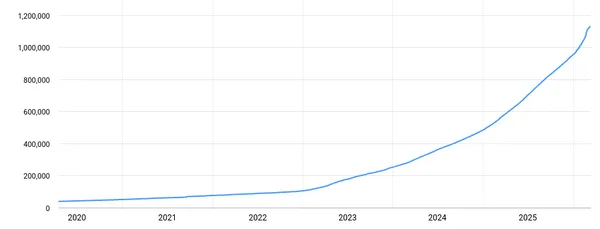
Source: https://domainnamestat.com/
Tuvalu signed a contract with GoDaddy in 2021 to manage the .tv TLD for a reported US$10 million a year. For a country with a Gross National Income of US$84 million (2025), this is a significant sum of money. In fact, the income from the TLD was a driver for Tuvalu joining the United Nations and helped to fund major infrastructure projects! Quite a positive side effect of a tech trend!
On the opposite side of the spectrum is the case of the .io. The ownership of the io TLD is unusually complicated. It represents the British Indian Ocean Territory. The territory was created in 1965, when the British government “legally” separated the Chagos islands from Mauritius. Mauritius was part of the British Empire since 1810.
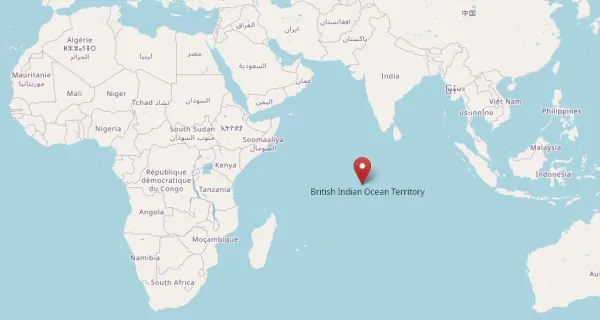
io TLD.In 1967, Britain granted Mauritius its independence, but hung on to this new territory. The order of events is no coincidence! The British and American governments had been quietly looking for an island to use as a military base in the Indian Ocean. With its central location and deep harbours, the Chagos islands was perfect for a military installment. The gotcha was that the island was populated. What transpired is that a large group of native people were evicted from their homes and in many cases had to leave the island altogether. Effectively they became refugees.
While you might have expected Britian to pocket the proceeds of the .io money, in fact it went to a British man called Paul Kane! It’s not really clear how that went down. The Internet Assigned Numbers Authority (IANA), the standards organization that oversees management of the Domain Name System (DNS), delegated .io to Paul Kane in 1997. Paul was a DNSSEC “keyholder”, one of a handful of people around the world entrusted with ensuring the security of the DNS. Having a relationship to the IANA was key I suspect (excuse the pun).
The management of .io was operated under a holding company called Internet Computer Bureau from 1997 until 2017. In April 2017, Paul Kane sold the Internet Computer Bureau to a privately held domain name registry Afilias for US$70 million in cash. It sounds like a plot from an espionage novel!
In 2021, an activist group of people from Chagos islands called the Chagos Refugees Group UK submitted a legal complaint to the Irish government against Paul Kane and Afilias, they are seeking repatriation for the .io domain. They were looking for backpayment of royalities of US$7 million per year in revenue generated by the domain.
In May 2025, the United Kingdom handed over sovereignty of the Chagos Islands to Mauritius. They retained a lease for the largest of the islands, Diego Garcia, keeping the key military facility in British and American hands for at least an additional 99 years.
According to the retirement policy of the Internet Corporation for Assigned Names and Numbers (ICANN), the organisation who manage the Domain Name System root, the io TLD will be phased out if it is removed from the ISO 3166-1 standard. The IO country code is on the chopping block, but it has not happened yet. [1] Historically, some exceptions have been granted, as was the case for .su.
The story of the Chagos Islands and the io TLD represent an ugly legacy of colonisation.
What I’d like you to take away from these 2 contrasting stories is that there are dimensions to purchasing a ccTLD-affiliated domain that often are overlooked.
Maintaining your digital real estate
In a way, you are buying digital real estate when you buy a domain name. When you buy a ccTLD domain you are putting faith in a country being competent and fair to reserve that spot for you. In most cases, you should be able to hold onto a domain forever if you renew it every year, but that is not always the case.
One example is .af, this is the ccTLD of Afghanistan. The “AF” internet modifier has inspired people to create some cheeky domain names with the af TLD. Since the Taliban returned to power in Afghanistan in 2021, they have routinely shut down .af domains without warning. One high profile example was queer.af being shut down without warning. Wes Bos’s domain bos.af was also abruptly canceled, he talked about it on a podcast episode, The Taliban Stole My Domain.
The concept of eminent domain can be extended to digital domains in practice, if not explicitly by law. Eminent domain refers to a government’s right to seize land for public use. If a country is acting in good faith, they will pay its owner “just compensation” but will take the domain without contest. It is a grey area. The international laws of the digital world are not defined in many instances.
It is not just the domain owner who could potentially evict you. Although less common, a domain registar could do the same without recourse. One example of this was in 2022, Namecheap decided to terminate services for Russian customers due to their government’s war with Ukraine. They gave customers some time to transfer their domains to another provider, which meant that they could hold onto their domains, nevertheless it was an inconvenience. Ukrainian officials wanted a stronger global response against russia, they asked Internet Corporation for Assigned Names and Numbers (ICANN) to disconnect all Russian sites from the internet, but ICANN denied their request.
It is suprising how geopolitical changes can affect the ownership of web domains. Web infrastructure organizations such as ICANN have historically championed political neutrality and tend not to interfere. However, the same cannot be said about TLD owners and domain registars.
History doesn’t repeat but it rhymes - the ai TLD
AI is so hot right now. So it comes as no surprise that demand for the .ai has soared. Since the launch of ChatGPT in November 2022, registrations of .ai domain surged from 144,000 registrations in 2022 to 1.1 million in March 2026.
Source: https://domainnamestat.com/
And who owns the ai TLD?
It belongs to the tiny island state of Anguilla with just 16,000 residents. It is a British Overseas Territory.
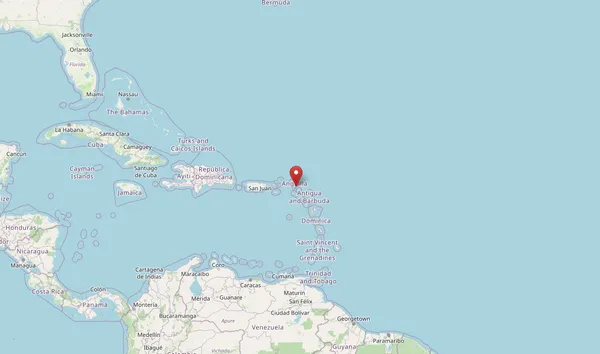
ai TLD.Similar to Tuvalu, this fortuitous domain name assignment has landed a tiny state a large income. The Government of Anguilla earned EC$168 million (US$62m) from .ai domain registrations in the first three quarters of 2025. Revenue is continuing to grow year on year.
One big risk for .ai domains is hurricanes. The island is subject to both sudden tropical storms and hurricanes, which occur in the period from July to November. To put the effects into context - the island suffered considerable damages from Hurricane Luis in 1995, severe flooding varying from 5 to 20 feet (1.5 to 6 metres) from Hurricane Lenny in 1999, and catastrophic damage to the tune of US$290 million from Hurricane Irma in 2017. Literally all of the servers hosting .ai domains could be wiped out in one foul swoop. I guess many folks who rushed to buy .ai were unware of this risk.
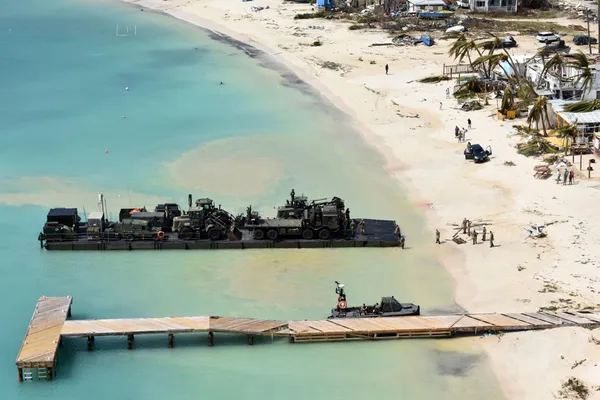
Image source: Ministry of Defence (Government of the United Kingdom) licensed under the United Kingdom Open Government Licence v3.0.
To protect against this vulnerability, in October 2024, Anguilla signed a five-year deal with a US tech firm called Identity Digital to manage the ai TLD. At the start of 2025, Identity Digital announced that it had moved all .ai domains from servers in Anguilla to its own global server network. This should prevent any disruption from future hurricanes, or any other risks to the island’s infrastructure, such as power cuts.
Wisely, Anguilla choose a revenue-sharing model with Identity Digital. The government of Anguilla gets the sales revenue from all .ai domains sold, while Identity Digital gets a cut, thought to be around 10%. This will mean that Anguilla will benefit from growing demand of .ai into the future. However, with a population of just 16,000, managing this wealth effectively is a challenge. Questions remain about how to sustain the digital economy if AI interest cools or an alternative TLD becomes the new hot property. The government is taking steps to mitigate this risk. There are plans to build a new airport to facilitate tourism growth.
Final thoughts
Naming stuff is hard. Domain names are no different. Next time you are buying a domain name, do a quick search on the TLD before you buy! There are practical and ethical implications that you may influence your decision, especially when it comes to country-code TLDs.
According to the ICANN, there is a possibility that “IO” may be removed as an assigned code in the ISO 3166-1 standard. Should this happen, ICANN’s community-developed retirement policy will apply. In essence, a five-year time window will commence during which usage of the domain will need to be phased out. That time window might be extended under certain circumstances. ICANN feel much of the discussion about
.ioat this time is simply speculation. Should anything change in the future, those changes will be well communicated. ↩︎